Showing posts with label About the author. Show all posts

Friday, September 11, 2015

"To face whatever lies before us...": New York City disasters and the prayers of young mothers

I was one of the many who witnessed the crashing of the plane into the
World Trade Center's South Tower on the morning of September 11, 2001
after turning on the television to see reports of the first crash

I was several months away from the birth of my third child - a precious daughter - on the morning of September 11, 2001. Taking a few quiet minutes before my sleeping children woke up, I was doing some inspirational reading with a book called In Conversation with God. The day's meditation read:
"It is in prayer that we learn the mystery of Christ and the wisdom of the Cross. In prayer we perceive, in all their dimensions, the real needs of our brothers and sisters throughout the world; in prayer we find the strength to face whatever lies before us..." - from a homily by Pope John Paul II, Jan. 13, 1981
The peace of my quiet morning did not last long. Soon I learned the true wisdom of those words and found out the reality of that day's trials.

"...whatever lies before us"... 

I learned the "real needs of [my] brothers and sisters throughout the world" with shocking clarity when I got a call from my Mom.

"Turn on the T.V.," she said. "A plane has crashed into the World Trade Center."

~

The Triangle Shirtwaist Factory fire
occurred in the Asch Building
(now the Brown Building)
at 23-29 Washington Place, NYC
It was only last week as I was thinking about another event in New York City's history that I made an interesting connection.

Ninety years before the World Trade Center disaster - on March 25, 1911 - another expectant mother must have been shocked to learn of a horrible tragedy that had just occurred. The Triangle Shirtwaist Factory fire took the lives of 146 garment workers - most of them young immigrant women ages 16 to 23. It would rank as the second deadliest disaster in New York City's history (behind the burning of a passenger steamship in 1904) - that is, until the destruction of the World Trade Center eclipsed them both ninety years later.

Like the World Trade Center tragedy, the Triangle Shirtwaist fire was a catalyst that brought enormous change. In this case, the movement for worker safety and social justice was finally brought to the forefront in New York and throughout the country.

A quick bit of research led me to a startling realization: at the time of the disaster, this young mother and her family had lived only six short blocks away from the Triangle Shirtwaist factory.

The woman? My great-grandmother, Ilona Ujlaky. A new immigrant to America who had arrived only two years earlier. Knowing her, she had said many prayers since she had arrived in the crazy and wonderful world of New York City. More than likely she prayed for these victims and their families, and the struggles of the city in which she and her husband were beginning their new life.

The child she was expecting? Her third. A baby girl. My grandmother.

In 1911 my great-grandmother and her family (she is pictured here c.1913)
lived at 415 East Fifth Street on the Lower East Side,
only about six blocks from the Triangle Shirtwaist Factory fire.

This article was originally published here at 100 Years in America in 2012. I have reposted it today in honor of the 14th anniversary of the 9/11 tragedy.

Monday, November 3, 2014

As the sun sets on the feast of All Souls


If you read my article over at The Catholic Gene about All Souls Day, you know that this day is very important to me. In fact, I consider it THE feast day for Catholic genealogists. (This is the day that our efforts to seek out the stories of the lives of our ancestors intersect directly with our Catholic faith and our responsibility to care for the souls of others. Read more in my article The Catholic Genealogists’ Feast Day: Lifting Your Family Tree to Heaven on All Souls Day).

In spite of the fact that our family had a very hectic All Souls Day this year with lots of activities, I was determined to be sure that we took time to commemorate the feast. It was late afternoon by the time a couple of my daughters and I finally arrived at the local cemetery to make a visit to my dear grandmother's grave. The sun was lighting up the gravestones beautifully as it descended.

We brought new flowers and, as we usually do, carried our small hand broom with us as we stepped out of the car to make our visit. My grandmother is buried under an oak tree, so we brushed aside the acorns that had accumulated since our last visit, and tidied up the place before we arranged the new flowers.

As we were doing so, we spotted a gentleman a stone's throw away who was doing a little tidying of his own around a gravestone. He was not, however, under an oak tree, but a pine tree, so he had a different problem: lots of pine needles. He was working diligently with a small rake and a number of cleaning tools, which interested me, so I walked over to say "hello".

We had a nice visit, getting a little tutorial about his method of cleaning his wife's gravestone, which looked immaculate, polished and shining beautifully. We thanked him and walked back to pay our respects to my grandmother before we planned to leave. A few minutes later, he walked over to us, supplies in hand, and offered to train us. After a minute or so of instruction, he left us with the supplies and tools and walked back to his wife's grave.

What a transformation! In just a few minutes, we had my grandmother's gravestone looking much cleaner than it had in a long time. It didn't look as professionally done as the one that the gentleman had worked on (and, as we learned later, had tended to several days a week for the past decade), but it was much cleaner and actually shined. The sun was getting closer to setting when we gathered up the tools and turned to walk back toward our benefactor to thank him. When we did so, we saw that he had finished his tidying up. He was standing still there before his wife's grave in the setting sun, Rosary beads dangling from his hands: a beautiful image for my girls and I to remember at the close of All Souls Day 2014.

Thursday, September 4, 2014

So I'm from Texas... (Smallest Leaf's take on FGS 2014)

The electric Texas flag at the Institute of Texan Cultures, San Antonio

It's true. I am from Texas, though you might not have known that from reading my blogs. My genealogical search focuses on the states and countries from which my ancestors hailed (I have Pennsylvania Irish, Massachusetts Irish and New York City Eastern European roots). Since I don't write much about where I live, you may not have been aware that Smallest Leaf actually makes her home in Texas.

But Texas was the focus recently of a great genealogical discovery of mine: my very first national genealogy conference! Yes, that's right. I've been researching my family for decades, blogging for over seven years, but had never attended a national genealogy conference until last week. Needless to say, I was very thankful that FGS (the Federation of Genealogical Societies) decided to boot scoot to San Antonio for their annual conference.


Gone To Texas! they called it, and I was happy to make my way across the countryside of this big state to join them. It was a tremendous experience for me.


Now, I've done much reading in the field of genealogy, watched lots of webinars, connected for years with many other genealogists (bloggers and not), but the experience of attending this conference was even better than I expected. The act of dedicating several straight days to genealogy lectures and learning, to connecting with other like-minded folks tracing their roots, and to perusing an exhibit hall dedicated completely to genealogy was an experience that I still need a good amount of time to process. I learned a lot and have lots of new ideas to help me with my continued research.


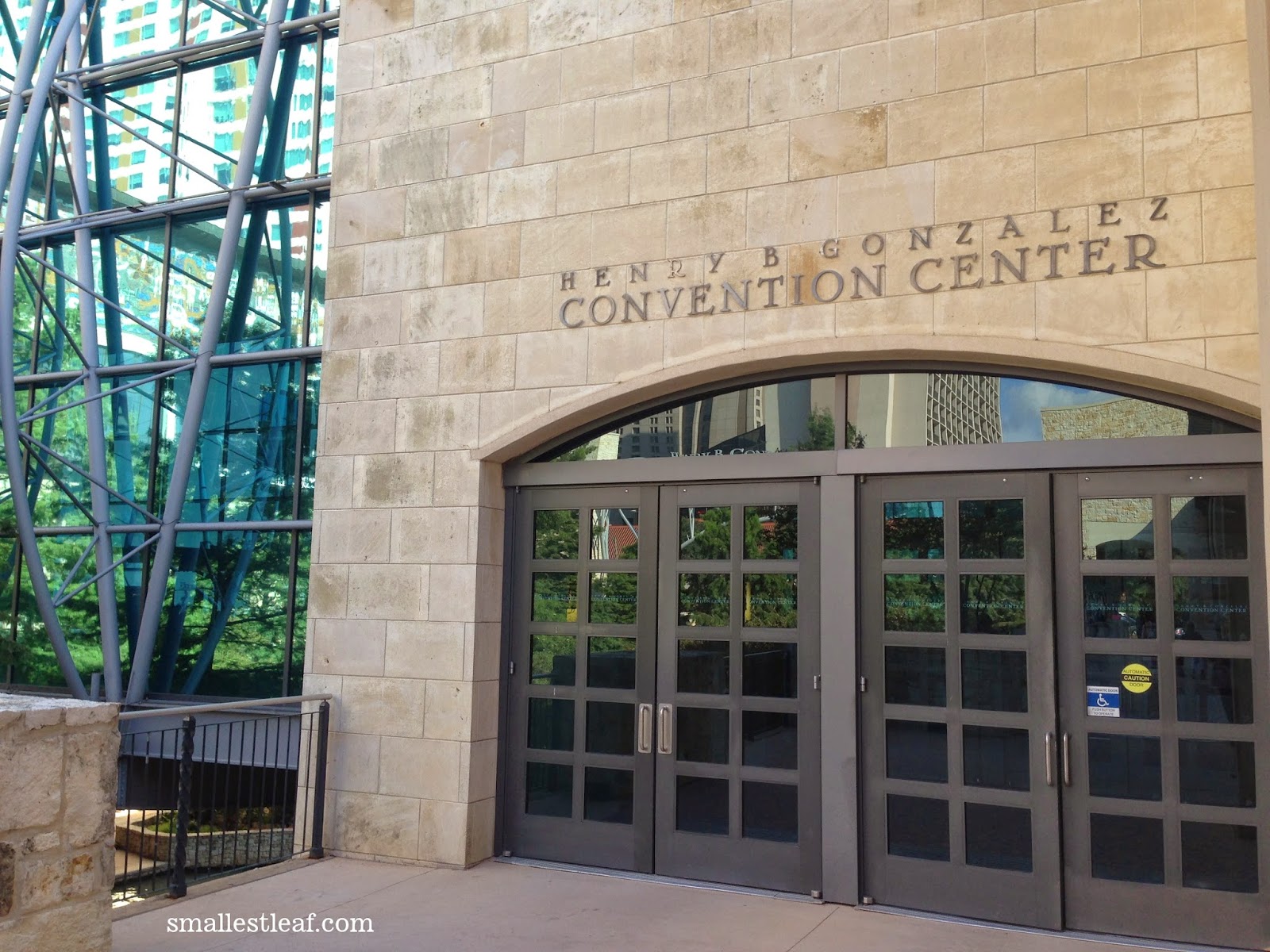
The conference, hosted at San Antonio's Henry B. Gonzalez Convention Center just a few blocks from the legendary Alamo, involved lots of river-crossing.


The convention center straddles the San Antonio River and a portion of its famous riverwalk, so back and forth I went along with many of the nation's genealogists as we hiked to and from lectures, luncheons, the exhibit hall and other places of interest.


I had a difficult time choosing from all of the excellent presentations. I cannot possibly give you a full recap of all that I soaked up from the many speakers I heard at FGS 2014, but I'll share with you some of the "bits of wisdom" I jotted down during the conference.

Some of these I tweeted during the event (and have extended here since there is no 140 character limit!). Some I just pulled out of my notes to share with you for the first time. Unfortunately, I didn't note "quotes" from the speaker of every presentation I attended (though I now wish I had!), so these tidbits don't represent every speaker I was privileged to hear last week.

Whether or not you attended FGS 2014, I hope you find some inspiration in these "sound bites" from the conference, which I've grouped below into three themes.


Words of Wisdom from FGS 2014


On genealogical research


"Build a profile of what's in the shadows. Look deeper at what's outside the flash. Often the places we are looking for are dimly lit. They are in the shadows. They are outside the flash." - J. Mark Lowe

Take time going through manuscripts for stories of ancestors and friends. Don't get what J. Mark Lowe calls "clickitis". "Squirrel!! (That's almost every genealogist I know.)" - J. Mark Lowe

"The best clues to birth family and origins are at the earliest proven place of residence, even if a 'burned county'." - Elizabeth Shown Mills

"A synonym for citation is description...Don't just look up a citation model and copy it, try to understand the source." - Thomas W. Jones

"Documentation is a conversation. Conversation is a description. I think you can have a conversation with your readers that is effective." - Thomas W. Jones

"Scientists don't just state conclusions. They document every step of the research process." (So must genealogists.) - Elizabeth Shown Mills

"You have to try to disprove your theories as well as you try to prove them." - Elizabeth Shown Mills

"Genealogists never run out of opportunity." - Elizabeth Shown Mills (explaining her bullseye genealogy approach)


A few genealogy a-ha's


"Types of maps to seek: any kind of map you can think of, any kind of map you can get your hands on." - Paul Milner

"Boundaries changed, like when the river changed course." - Paul Milner

"Photos don't go down from direct descendant to direct descendant. They trickle down the tree and trickle up the tree. The provenance of the photographs represent relationships within the family." - Maureen Taylor

"Have a plan for who will inherit your photos. Decide now, not later, or else all your photos will end up in one of my presentations and I won't know who they are." - Maureen Taylor

Why become a Certified Genealogist? If not, "we're sitting in our bunny slippers at 2 am doing research asking, 'Am I doing this right?!'" - Judy Russell


On the importance of story


"We [genealogists] understand that the story is more than six words. It's more than half a paragraph. We understand that the story is longer than that." - J. Mark Lowe

"Preserve it now! Tell your family these stories now. Even if it's an oral story, pass it down. Share it with your family. Tweet it if you have to!" - Juliana Szucs Smith

"What are you going to leave behind? An inscription? A memorial of some kind? We all have a story to tell." - Paul Milner

"You've got names, filled out the family group sheet. But who do you love? The ones whose stories you know. How are you going to tell those stories? How are you going to pass those stories along?" - Paul Milner


Button, button, who's got the button?


Smallest Leaf's handcrafted FGS 2014 buttons (it was a family affair!)
alongside my first set of GeneaBlogger beads (courtesy of Thomas MacEntee)

Prior to the conference, I designed and created (with the help of several of my family members) a set of buttons for FGS 2014. It was lots of fun passing them out at the conference to online friends whom I finally had the chance to meet in person, and to fellow genealogists I met for the first time at FGS. I've been told that my buttons were a hit. If you attended, I hope you got one and that I had a chance to visit with you there! If not, I'm hoping that FGS members enjoyed their time in Texas and will come back again to the Friendship State very soon. Ya'll come back now, ya hear!

Tower of the Americas as viewed from the Institute of Texan Cultures, San Antonio

    Tuesday, June 10, 2014

    Little girls, family trees and a cemetery trip

    Every year on my "blogiversary" I like to give a shout out to my readers to let you know that I am still alive and well (though blogging may be light). This year I missed the chance (by about a week) to celebrate the day seven years ago that I started blogging. I had completely forgotten! When I took a look at my calendar to see what had been keeping my attention on the anniversary of the day I started my genealogy blogs, I was happy to see that I had spent my time celebrating genealogy in a very special way: teaching family history to kids.

    I had scheduled a two day Ancestor Detector Day Camp for young girls to begin (unbeknownst to me) on my genealogy blogs' anniversary! I had a wonderful time spending the first part of the week teaching a group from a local troop of American Heritage Girls ages 9-11 how to search for and celebrate their family history.

    Here are a few highlights from our day camp as the girls and I worked to help them fulfill the American Heritage Girl requirements so that they could earn their Ancestor Detector Badges:

    Day 1: Family History Scrapbooks!

    Prior to our first meeting, the girls gathered family documents, made phone calls to grandparents, and started completing a pedigree chart of their family tree. During our first gathering each girl began a scrapbook to include all of the documents, photos, and other memorabilia they had gathered. I wish I had gotten a photo of all the creative books they made! Below is the AHG handbook page with badge requirements for the Ancestor Detector badge, and two of my daughters' scrapbooks:


    Day 2, Part 1: Cemetery field trip! 

    We started our second day camp day by gathering at a local historic cemetery. We live in an area whose history is not easily visible, and I wanted the girls to see some of the headstones dating back to the mid-19th-century and written in the native language of the early German settlers to our area. I was happy to introduce the girls to this historic place, and to help them to understand how to properly respect the final resting places of those that came before us. 


    As part of our field trip, we searched for the headstones of the first settlers to our area (after whom many streets and schools are named), and did a little cemetery scavenger hunt for fun. (We used the form below created by Jennifer of Climbing My Family Tree.)


    It was a beautiful day at the cemetery, but we needed the refreshing lemonade that we brought to enjoy under the shade trees after our romp around the cemetery grounds in the heat.


    Day 2, Part 2: Heirlooms and ancestral countries! 

    Immediately after the hot trip to the cemetery, we gathered (in a cooler place) to complete day two of our Ancestor Detector badge work. The day's focus included the countries of our ancestors, which each girl had done a little research on at home before our gathering.

    We had a great assortment of ancestors from various countries represented, including Germany, Hungary, Poland, Italy, Ireland, the United Kingdom, Spain, Lebanon, Mexico, Haiti and even the little island of Domenica in the Caribbean.

    The final part of our session involved a "show and tell" of family heirlooms (or photos of them). Each day camper brought in a family heirloom (or a photo of one) to share with the other girls. They told the stories of their items and to whom they had belonged: a little lesson in heirloom provenance. My day camper daughter chose to share this little bronzed boot that was worn by her great-great-grand-aunt as a baby during the 1920s:


    The short time I spent with these girls was not nearly enough, but I hope it got them thinking about their family history and lit the spark for a little more ancestral research this summer. At the very least, maybe they'll think of making another phone call to their grandmothers!

    Tuesday, December 10, 2013

    My Catholic, Hungarian and Croatian Genealogy QuickGuides™ now available as Kindle eBooks


    If you are tracing Catholic, Hungarian or Croatian roots (or two of those, or all three!), you may be familiar with my Catholic, Hungarian and Croatian Genealogy QuickGuides™. Published in partnership with Legacy Family Tree, these resources were first available as PDF downloads on the Legacy Family Tree website.

    I am pleased to announce that all three guides are now available as Amazon Kindle eBooks. Whether you have a Kindle (or use the free Kindle app on your computer, tablet or smartphone) you can now have handy access to these guides in eBook format.

    What's the difference? The PDF downloads are in a compressed format and make the guide compact for easier printing and sliding into the rings of a notebook. The eBooks include the same content laid out into book format, so they have more pages. They would use up more paper if printed, yet are easily scrollable using a Kindle or Kindle app.

    For more details about each individual guide, visit:

    Happy researching!

    Monday, December 9, 2013

    My new Hungarian Genealogy QuickGuide™: Trace your roots in the land of the Magyars

    Hungary’s legacy as a nation extends back a millennium, and its people (and diaspora) are proud of their great heritage, myself included. As a child I was intrigued by the idea that my own grandfather had been born in a different country a world away. I grew up with the tastes and smells of Hungarian Gulyás (goulash), Töltött káposzta (stuffed cabbage), Csirke paprikás (chicken paprika), and Kifli from my grandmother's kitchen. It was only natural to me to want to learn more about this country that figured so largely in the lives of my grandparents and to want to delve into my Hungarian family tree.

    My Hungarian Genealogy QuickGuide™
    is a resource for both experienced researchers
    and those new to tracing their Hungarian roots
    After the recent success of my Croatian Genealogy and Catholic Genealogy QuickGuides™, I decided to focus on sharing the resources and research tips I've found while tracing my Hungarian roots. In partnership with Legacy Family Tree, I am pleased to present a brand new aid in your search for roots in the land of the Magyars: my Hungarian Genealogy QuickGuide™, a downloadable resource that includes -
    • An overview of the history and geography of Hungary (as a nation and as part of the Austro-Hungarian Empire)
    • Details about the types and whereabouts of available civil and church records
    • A description of the various types of archives and repositories that house Hungarian records
    • An introduction to the languages in which Hungarian records were written
    • Links to many types of online resources (genealogy guides, translation tools, maps, forums, blogs and more)
    • A list of genealogy-related publications in both English and Hungarian
    • A research strategy to follow for success in tracing your Hungarian roots

    The search for roots within the age-old kingdom of Hungary, though often made complex by various languages and border changes, can be a greatly rewarding experience. Hungary has long been a crossroads, and Hungarian ancestors’ histories and records of genealogical interest are intertwined with neighboring countries and the empires and occupiers that ruled the area over the centuries.

    If you have ancestors who emigrated from Hungary and would like to begin to trace or continue to deepen your knowledge of your family tree, I hope you'll allow me to share what I've learned with you.

    ~

    Update: I am pleased to announce that all three of my genealogy guides are now available as Amazon Kindle eBooks. Whether you have a Kindle (or use the free Kindle app on your computer, tablet or smartphone) you can now have handy access to these guides in eBook format.

    What's the difference? The PDF downloads are in a compressed format and make the guide compact for easier printing and sliding into the rings of a notebook. The eBooks include the same content laid out into book format, so they have more pages. They would use up more paper if printed, yet are easily scrollable using a Kindle or Kindle app.

    For more details about the other QuickGuides™ I've authored, see: My new Catholic Genealogy QuickGuide™: Let me help you find those Catholic ancestors and My new Croatian Genealogy QuickGuide™: Journey with me back to your roots in Croatia.

    Happy researching!

    Thursday, December 5, 2013

    Hungarian Kifli at Christmas: A long legacy of motherly love

    I've shared our family's Kifli recipe several times already here at 100 Years in America, telling the story of how I finally learned the Hungarian name of this traditional favorite. (By the time I came along my family was calling them "Gramma's Christmas Cakes". This European treat had Americanized its name along with the names of my immigrant ancestors!)

    This year I'd like to share this delicious family treasure again within my series of Advent Calendar of Christmas Memories articles, giving a little more attention to our family's special legacy with regard to this delicious traditional favorite.


    This is the first Christmas that our family will celebrate without a very special family member, my dear Aunt Barbara. She passed away last January. It has been almost a year now, yet the passing of the first Christmas without a loved one is probably one of the most difficult milestones when grieving a loss. So it is with dear Barbara, for myself and the rest of the family, but particularly for her children and grandchildren, I'm sure.

    One of 100 Years in America's most faithful readers, one of Barbara's daughters, faithfully bakes these family Christmas cakes each year (and provided me with the beautiful photograph above). One of the sad moments she experienced this month was not being able to call her Mom and say, "Guess what I'm making?" My cousin was taught by her mother, Barbara, who was taught by her mother, our dear grandmother Mitzi. A young bride at age 18, Mitzi had gone to live with her new husband in the household of his mother (and many siblings) several states away from her home. There she was trained to cook and bake as her mother-in-law did, using her recipes from northeastern Hungary. One of the recipes Mitzi mastered: Hungarian Kifli.

    Mitzi's mother-in-law, Maria (Németh) Tóth (known as Mary in America), was a 34-year-old mother of four when she emigrated from Hungary's Borsod county to join her husband. Along with transporting four children (one a baby!) on that journey, Maria carried with her a wealth of Hungarian family recipes that would be treasured by many generations of our family over the next century (and hopefully more!).

    I like to imagine Maria as a young girl within her mother's kitchen, learning to cook the Hungarian Gulyás (goulash), Töltött káposzta (stuffed cabbage), Csirke paprikás (chicken paprika), and Kifli that would become our family's favorites. Maria and her mother could not possibly have imagined that a century later and a world away, their descendants would remember them and their recipes fondly, having received the legacy of nourishing love produced by the hands of their daughters, daughters-in-law, and grand-daughters.

    As I once again share this Kifli recipe, I do so in honor of these women who came before us: my dear Aunt Barbara, my grandmother Mitzi, my great-grandmother Mary (Maria), and her mother (another Barbara): Borbála* (Nagy) Németh.

    *Borbála is the Hungarian version of the name Barbara


    100 Years in America's Family Kifli Recipe

    Otherwise known as "Gramma's Christmas Cakes"


    Apricot Jelly Filling

    3 lbs. apricots
    1 1/2 cups sugar
    Cinnamon

    • Put them in a pot with enough water to cover them plus about 1 inch more
    • Cook for about 45 minutes until soft, stirring frequently
    • Mash the apricots
    • Add sugar
    • Cook about 1 1/2 to 2 hours until very thick (the longer the better), stirring frequently
    • Sprinkle the jelly with cinnamon


    Christmas Cakes

    4 cups flour
    1/2 lb. sweet butter at room temperature
    6 eggs - separated - at room temperature
    1 teaspoon salt
    1 teaspoon vanilla
    8 oz. sour cream at room temperature
    4 tablespoons sugar
    1 packet of yeast (prepared by mixing with 1 teaspoon sugar & about 1/4 cup milk)
    Homemade apricot jelly
    1 lb. walnuts (add 4 teaspoons sugar to each lb. when chopped)
    Confectioner's sugar

    • Mix flour with butter and then salt and sugar
    • Make a well in the middle - add egg yolks, vanilla and sour cream gradually
    • Mix and kneed until smooth (keep working the dough until ready)
    • Use flour to make it not too sticky (can freeze - wrap in freezer paper and cover with flour)
    • Roll out dough
    • Cut the dough into 4 pieces
    • Chop walnuts and whip egg whites
    • Roll out one of the 4 pieces of dough
    • Cut into individual 3 1/2 x 3 1/2 squares and fill with a heaping teaspoon of homemade apricot jelly
    • Roll each into a horn (crescent)
    • Top each with egg whites and nuts
    • Bake in the oven at 350 degrees until light brown (about 30-35 minutes)


    Kifli may also be served with a prune filling (prepared similarly to the apricot filling) or a walnut filling, although the apricot kind has always been the favorite in my family. If using walnut filling, add boiled milk to the nuts until pasty, then grated lemon rind.


    ~


    This article is part of a series written in celebration of the Advent and Christmas seasons. It will be included as part of the Advent Calendar of Christmas Memories 2013, Day 4: Christmas Recipes. For more Advent and Christmas memories here at 100 Years in America (going back to 2007), scroll through these articles or stop by my Pinterest page. Visit this preview for more details about the GeneaBloggers Advent Calendar of Christmas Memories and to get some inspiration to get yourself in the holiday spirit!

    Note: Our family's Kifli recipe has also appeared previously as part of the Advent Calendar of Christmas Memories here at 100 Years in America several times (once in 2007 and then twice in 2009 - here and here). Over the past six years, these have continued to be among the most frequently viewed articles here at 100 Years in America. If you took the time to try out our family Kifli recipe, please leave a comment and let us know!

    Wednesday, December 4, 2013

    Christmas Eve Luminaria: "Who can sleep on this night that God became man?"

    My absolute favorite Christmas song is O Holy Night. The beautiful words and ascending phrases of the music stir my heart as I revel in the glory of Christmas. Many of my childhood Christmas Eves were spent savoring the holiness of this very special night.

    After the rest of the house had gone to sleep – or at least after I had gone to my own room – I would sit at my desk and look out the picture window overlooking our front yard.  It was the tradition in my neighborhood to set out luminaria – brown paper bags weighted down with sand and illuminated by a burning candle set inside.


    My family and I took time each Christmas Eve afternoon to work alongside our neighbors shoveling the sand, filling the bags, and getting everything ready for sunset on this, the most joyful night of the year.  I didn't know it at the time, but this tradition had originated with Spanish immigrants to the New World.  It was a way that they, as Catholics, helped "light the way" for the Christ Child to visit their homes and hearts on this very special evening.


    Each year, after my family and I had gone to Christmas Eve Mass, we would come home to light the luminaria, share a small dinner, and head to bed in anticipation of Christmas morning.  Once I was up in my room and ready for bed, I sat at my window and always watched for as long as I could, counting the candles that had gone out and savoring the glow and warmth of the peace that is Christmas Eve.


    A few years ago I read and smiled at the words of St. Teresa Benedicta of the Cross (Edith Stein) about Christmas Eve, “Who can sleep on this night that God became man?” I still stay up through most of the night every Christmas Eve, savoring the quiet and sometimes listening to a rendition of O Holy Night as I enjoy the peace and anticipation of this beautiful evening when Mary brought forth her firstborn Son.

    ~

    O Holy Night

    O Holy Night! The stars are brightly shining,
    It is the night of the dear Saviour's birth.
    Long lay the world in sin and error pining.
    Till He appeared and the Spirit felt its worth.
    A thrill of hope the weary world rejoices,
    For yonder breaks a new and glorious morn.
    Fall on your knees! Oh, hear the angel voices!
    O night divine, the night when Christ was born;
    O night, O Holy Night , O night divine!
    O night, O Holy Night , O night divine!

    Led by the light of faith serenely beaming,
    With glowing hearts by His cradle we stand.
    O'er the world a star is sweetly gleaming,
    Now come the wisemen from out of the Orient land.
    The King of kings lay thus lowly manger;
    In all our trials born to be our friends.
    He knows our need, our weakness is no stranger,
    Behold your King! Before him lowly bend!
    Behold your King! Before him lowly bend!

    Truly He taught us to love one another,
    His law is love and His gospel is peace.
    Chains he shall break, for the slave is our brother.
    And in his name all oppression shall cease.
    Sweet hymns of joy in grateful chorus raise we,
    With all our hearts we praise His holy name.
    Christ is the Lord! Then ever, ever praise we,
    His power and glory ever more proclaim!
    His power and glory ever more proclaim!


    ~

    This article is part of a series written in celebration of the Advent and Christmas seasons. It will be included as part of the Advent Calendar of Christmas Memories 2013, Day 3: Christmas Music and Advent Calendar of Christmas Memories 2013, Day 4: Christmas Lights. I have also submitted it to footnoteMaven as part of her traditional Blog Caroling event.

    For more Advent and Christmas memories here at 100 Years in America (going back to 2007), scroll through these articles or stop by my Pinterest page. Visit this preview for more details about the GeneaBloggers Advent Calendar of Christmas Memories and to get some inspiration to get yourself in the holiday spirit!

    Wednesday, June 5, 2013

    On finding my work cited in a young historian's annotated bibliography

    So here I was at the state level of the National History Day competition. 


    Back to my story...

    The time had come (following the interview and judging period) when the doors open into the museum hall so that visitors can take a look at the year's entries in both senior and junior divisions of the historical exhibit category. So I wandered the rows, viewing projects on this year's theme: Turning Points in History. I saw projects on everything from apartheid to the Triangle Shirtwaist Factory fire to Napolean Bonaparte to the first transcontinental railroad. 

    Suddenly, an exhibit struck my eye. The topic: the Cristero rebellion in 1920s Mexico. Now here was a topic I knew something about. I had written an article about it for The Catholic Gene blog. It was a troubling period just decades ago in Mexico's history featuring the almost incomprehensible struggle for religious liberties and civil rights fought by the Mexican people.

    I took time to read this project a little more closely than the others, picking up the annotated bibliography on the table in front of the exhibit. I flipped open a page, and - surprise! - there was my article, cited and annotated by the students who created the project. 

    I was happy to see that they had used my work as a source, and it was a good reminder of the importance of solid research and writing. I work hard to do complete research and write accurate articles about the topics I cover.  Yet, seeing that these students had relied on my work as a central resource for their historical research project gave me additional inspiration to continue to ensure the integrity of what I publish here on the web and elsewhere.

    ~

    One of my greatest hopes is that I can help in some small way to inspire young people to delve into and begin to love the study of history. So many adults, sadly, avoid anything with the H-word stamped onto it, having flashbacks of failing to memorize a timeline or to learn names and dates for a test during their school years. 

    The nation's top young historians will gather this week to
    compete in the National History Day competition at the
    University of Maryland, College Park 

    National History Day is encouraging young students to see beyond the names and dates and learn what history is all about through in-depth investigations using primary sources. They are given a chance to become young historians, doing meaningful research and presenting their conclusions within museum-like exhibits and other formats much like a professional historian might have the opportunity to do. What a thrill for me to find my name and work within the bibliography produced by a group of these young historians!

    This year's National History Day competition will take place this coming week at the University of Maryland, College Park: June 9-13, 2013. The theme is Turning Points in History. If you are in the area, I encourage you to stop by and view some of the nation's best student-created historical exhibits, documentaries, websites, papers and performances of the year. I'll be cheering on some of those talented students during this year's competition!

    Get National History Day updates on Twitter by following them at @NationalHistory or myself at @smallestleaf.

    Sunday, June 2, 2013

    100 Years in America turns six years old!

    Today is the six year anniversary of 100 Years in America! It's been quiet for awhile over here and at my other genealogy blogs, but I've been busy with some fun projects outside of blogging and hope to find time to do some more writing again now that summer has hit.

    A little update on what I've been up to in the world of genealogy:

    Earlier this year I created and published two genealogy guides through Legacy Family Tree: the Catholic Genealogy QuickGuide™ and Croatian Genealogy QuickGuide™. I'm now at work on and very excited about my third such project. Watch 100 Years in America and the Legacy website for its announcement.

    I've had the joy to present to several genealogy societies recently on the topic of "Telling the Tales of Your Family Tree: How to Share Your Research in Story Form". I hope I have inspired some of my listeners to get to work turning their pedigree charts into story plots and sharing the fascinating tales of their ancestors with their extended families. If you have a group interested in a similar presentation, please let me know.

    It's going to be a long time in the works, but I've been dedicating myself to re-organizing many of the records I've collected over the years, scanning them, citing them properly, and revisiting them with new eyes for information that I might have missed on the first once-over. I've also been creating some new family timelines and am unveiling some fascinating stories. I hope to share some of those on my blogs in the near future.

    It is hard to believe that 100 Years in America is celebrating its sixth anniversary! What fun I've had sharing my family's stories, and connecting with distant cousins and fellow genealogy buffs. The comments and emails from you, my readers, continue to inspire me to delve deeper into my personal ancestral search and to continue to share my love for history with others. Thanks again for stopping by!

    Wednesday, February 13, 2013

    My new Catholic Genealogy QuickGuide™: Let me help you find those Catholic ancestors!

    There is much more to Catholic genealogy than just sacramental records.
    The ecclesiastical paper trails left by our Catholic ancestors allow us to explore
    their lives through important milestones painstakingly recorded by the church.
    If you are researching Catholic roots, I'm sure you have a beginning understanding of the importance of Catholic sacramental records. Baptism and marriage records, in particular, are among the first of our ancestors' documents that we collect. They provide a wealth of information, allowing us to confirm names and family connections, link generations, and gain insight into important milestones in the lives of those who have gone before us.

    In many countries, Catholic sacramental registries often served as both religious and civil records. In these cases, they may be the only evidence available to provide clues into the lives of generations passed. Yet, there is so much more to Catholic genealogical research. Church records (which take many forms beyond parish sacramental registries) and other Catholic resources offer a huge, often untapped resource.

    After much research into this topic, I have created a Catholic Genealogy QuickGuide™, now available for purchase through Legacy Family Tree. I have perused all the published resources on the topic that I could find, done my own personal research using Catholic records, and put together an introduction to Catholic genealogy that I hope will provide help to both the beginning and experienced researcher.

    My Catholic Genealogy QuickGuide™ contains descriptions of the history and types of Catholic records, what value they provide to the researcher, and where to find them. It offers a guide to assist you in following your ancestors' paper trails, and lists books, periodicals and online resources for help in researching Catholic roots in general and in understanding special topics related to specific ethnic groups and parts of the world. I've also provided some help in getting started with Latin language record translation.

    If you have Catholic ancestors, I hope you'll allow me to share what I've learned with you. Visit Legacy Family Tree's website for more information. It is my hope that I can help you begin to understand the wealth of resources available to you in your search for Catholic roots!

    ~

    Update: I am pleased to announce that all three of my genealogy guides are now available as Amazon Kindle eBooks. Whether you have a Kindle (or use the free Kindle app on your computer, tablet or smartphone) you can now have handy access to these guides in eBook format.

    What's the difference? The PDF downloads are in a compressed format and make the guide compact for easier printing and sliding into the rings of a notebook. The eBooks include the same content laid out into book format, so they have more pages. They would use up more paper if printed, yet are easily scrollable using a Kindle or Kindle app.

    For more details about the other QuickGuides™ I've authored, see: My new Hungarian Genealogy QuickGuide™: Trace your roots in the land of the Magyars and My new Croatian Genealogy QuickGuide™: Journey with me back to your roots in Croatia.

    Happy researching!

    Wednesday, January 23, 2013

    It is hard to say good-bye to these dear women

    This month, within the span of a week's time, I lost two very special ladies: my beloved Aunt Barbara and my dear Great Aunt Molly.

    Barbara
    Molly
    It is hard to say good-bye to these women.

    They each lived many states away from me, and that has been the case for most of my years (with the exception of my early childhood and a few years about a decade ago when I had the joy to live close to one of them). Yet, they each figured largely in my life in ways that they may not have even realized.

    First as a child, then as a young lady and a grown woman, I have often looked to the women in my family for inspiration and example. I have gained courage for my own life through their stories, their struggles and their vibrant personalities. They have walked ahead of me on the journey through girlhood into adulthood, but we share so much - the same larger than life ancestors who have helped to shape us; the same struggle to make sense of and to find courage for the challenges in the life of a woman.

    I have often been inspired by the stories of women ancestors that I never had the chance to meet, yet these dear aunts have touched me in a special way. Both had lively personalities, a great sense of humor, and unrelenting strength of will which gave them the ability to overcome their own personal difficulties. I will remember Barbara especially for her warmth, openness and honesty. I will remember Molly for her delightfully spunky personality. I have been blessed that my life crossed paths with each of theirs, if even for short time, and that I have had the gift of their sweet and strong influences over the years.

    Rest in peace, sweet ladies. You are both very dear to my heart.

    (This tribute to my aunts Barbara and Molly has been cross-posted over at my blog Small-leaved Shamrock.)

    Wednesday, December 26, 2012

    My new Croatian Genealogy QuickGuide™: Journey with me back to your roots in Croatia

    My family's Croatian roots were originally hidden.
    After research I discovered that my grandmother's
    "Hungarian" family had actually originated in northern Croatia.
    This fall I visited Croatia, but not in the sense that you might imagine. Though I do hope to actually set foot in the country of my ancestors again sometime in the next few years, this "trip" to Croatia was a virtual tour of the country, its history, its geography, and most of all its genealogical treasures.

    Croatian genealogy can be a challenging area, yet those who are up to the task can be rewarded with great discoveries.

    I am privileged to be able to delve into the heritage of my great-grandparents' who hailed from near the Hungarian border in the northernmost region of Croatia. The country is diverse, and so are the stories of the peoples who have lived within its borders. The historical influence of many different nations, peoples and cultures and the variety of languages found within Croatian records can test the skills of even an experienced genealogist.

    My Croatian Genealogy QuickGuide™
    is a resource for both experienced researchers
    and those new to tracing their Croatian roots
    In partnership with Legacy Family Tree, I am pleased to present to you a brand new aid for your quest for Croatian roots: my Croatian Genealogy QuickGuide™, a downloadable resource that includes -
    • An overview of the history and geography of Croatia
    • Details about the types and whereabouts of available records
    • A description of the various types of archives and repositories that house Croatian records
    • An explanation of the numerous languages in which Croatian records were written
    • A glossary of common terms in several of those languages
    • Links to many types of online resources (genealogy guides, translation tools, maps, forums, blogs and more)
    • A list of genealogy-related publications in both English and Croatian
    • A research strategy to follow for success in tracing your Croatian roots
    One of the kind editors who took the time to preview this little guide for me wrote a note on the sidebar during the editing process: "You're practically handing them their family trees!" Well, not quite, but it is my hope that this resource will act as a compass when you're feeling lost in the world of Croatian genealogy.

    If nothing else, I hope it will inspire you to take up the project again (or for the first time). Working on this project has definitely done that for me. I am proud to be the descendant of my Croatian-American great-grandparents and am greatly looking forward to digging more deeply into my Croatian roots. I hope you will join me.
    ~

    Update: I am pleased to announce that all three of my genealogy guides are now available as Amazon Kindle eBooks. Whether you have a Kindle (or use the free Kindle app on your computer, tablet or smartphone) you can now have handy access to these guides in eBook format.

    What's the difference? The PDF downloads are in a compressed format and make the guide compact for easier printing and sliding into the rings of a notebook. The eBooks include the same content laid out into book format, so they have more pages. They would use up more paper if printed, yet are easily scrollable using a Kindle or Kindle app.

    For more details about the other QuickGuides™ I've authored, see: My new Hungarian Genealogy QuickGuide™: Trace your roots in the land of the Magyars and My new Catholic Genealogy QuickGuide™: Let me help you find those Catholic ancestors.

    Happy researching!

    Saturday, September 29, 2012

    The search for family history: Savoring the journey

    Jacqui Stevens over at A Family Tapestry wrote an insightful post this past week entitled A Blog Needs a Voice that touched on "the slow journey of stopping along the way to absorb the aromas of life each of [our family's previous] generations must have experienced".


    That describes perfectly my approach to this lifelong project I call family history. When I stop and think about the few generations for which I have uncovered names and dates, I am sometimes tempted to have a fleeting moment of discouragement, since I have been tracing my family tree for so very many years! Yet, the great blessing I receive from this "slow journey" is the glimpse into the experiences of those who have lived before me; it is the reward of learning their stories, how they fit into the greater history of their times, and how their lives have helped to shape who I am today. That is what I seek to share within each of my family history blogs.

    I'm sure that I will never "finish" my family tree. It is a work in progress that I hope someday will be continued by the younger generations in my family. Yet, uncovering a little bit about the lives of those before me who have been forgotten is more fulfilling to me than just blazing through my genealogy research to fill out the complete list of names and dates that make up my direct ancestry.

    I love the way Jacqui explained this rewarding aspect of the search for family roots: "While we may never have met these people in real life, the events that shaped their lives ultimately touched our own in some way—be it ever so small. That’s the part of our roots that I focus on when I ferret out the message behind the data and documents. Perhaps it’s that relay race of influence passed down from generation to generation that fascinates me..."

    I've entitled the blog about my Boston Irish-famine-immigrant ancestors "A Light That Shines Again" after a stanza of a poem that summed up my purpose in writing: to resurrect my forgotten ancestors' humble lives from the "death of memory" so that they might "shine again".

    Here is the stanza:
    "Yet not in vain,
    Fathers and mothers, were your humble lives;
    Each in its turn an influence that survives,
    A light that shines again
    In sacred memories, and in hearths and homes,
    Vital as greater names that gild historic tomes…” 
     
    ~ Christopher Pearce Cranch
    I like to think of my family history blogs as a type of "illuminated manuscript", but not the illustrated kind, like the famous Book of Kells. My blogs are more than just a list of dates and names; they are a collection of stories that I hope will illuminate the lives of those who have come before me so that their memories will live on and that others will gain strength from the inspiration of their lives.

    ~ 

    Thank you to Jacqui Stevens for highlighting my writing at 100 Years in America and at The Catholic Gene within her "tour" of blogs "with a voice". Visit her article for some good reading suggestions and also take some time to page through more of this prolific blogger's work. You will be enriched.

    Saturday, September 15, 2012

    My Lady of Sorrows: When Family History Meets the Catholic Liturgical Calendar

    Helen Ulaky was born Ilona Bence.
    She lived to the age of 97.
    You don't have to spend too much time reading 100 Years in America to come to the realization that I admire my great-grandmother Helen Ulaky. I write a lot about her life.

    I only had the opportunity to spend a little bit of time with her during the years our lives intersected. She was already in her eighties by the time I was born, and my family and I didn't have too many opportunities to visit with her during those years prior to her death at age 97. Yet she had a strong presence in my life: partly because of a special memory I have of one of my visits with her, and partly because of a photograph.

    Grammy Ulaky was a praying woman, and I remember vividly one visit I made as a child to her home. She called me over to her and gave me a Miraculous Medal (a Catholic medal meant to be worn as a necklace as a statement of faith). That moment stuck in my memory for many years. I felt like I had been given a birthright. She had shared with me a special item; but even more importantly, she had entrusted me with her most precious treasure: her Catholic faith.

    I didn't see her too many times after that visit, but her photograph was a regular presence in my life. I was blessed to share many visits with one of her daughters: my dear grandmother. Gramma also had a strong Catholic faith, and like many Catholics, she kept a crucifix on the wall and a vigil candle on the dresser in her bedroom. In its permanent home beside the candle was the photograph of her mother: my great-grandmother, Grammy Ulaky.

    Over the years I've tried to learn about the life of this dear woman whom I knew only as a sweet old gray-haired grandmother with a thick accent. I've been fascinated and humbled by what I've discovered. So many of the important events of the early 20th century impacted her life directly. To tell my children the story of her life is to give them lessons in some of the most historic events in modern American history.

    Her life (which spanned almost a century) was filled with the joys of a close and loving family, yet she faced many times of sadness throughout her days.

    Here is a brief and incomplete timeline of just several decades of her life:

    Ilona (Bence) Ujlaki at age 22
    with her firstborn son before
    their emigration (and her
    Americanized name)
    1909 She and her young son left their home and family in their native Hungary to meet her husband in America. She would never see her family or her homeland again. After arriving in New York City her son, just age two, was separated from her and quarantined within the Ellis Island hospital.

    1911 As a young mother of two with a baby on the way, she stayed at home with her children living tenement life in New York City's Lower East Side while her husband worked each day. Their home was just six blocks from the historic Triangle Shirtwaist Factory fire.

    1921 Like many immigrant families who were establishing themselves in their new country, she and her husband Frank and their five children left Manhattan's immigrant neighborhood and moved out to Staten Island once they had the means to do so. Her husband enlisted the help of friends to build their home.

    1925 Her son Frankie, the eldest of her (now six) children, was hospitalized for Encephalitis Lethargica after an outbreak of this "sleepy sickness" took hold in New York City. He remained hospitalized for the rest of his life.

    Helen with her grown daughters and two
    young granddaughters about 1936
    in front of the home her husband built  
    1934 She was the proud grandmother of three grandchildren, but was saddened by the sudden loss of her grandson Stephen who died from meningitis at the age of 15 months.

    1939 After battling tuberculosis for five years under the care of doctors at historic Seaview Hospital, her husband Frank passed away at the age of 60 . After his death she lost the home that he had built and she and her youngest children moved to a "railroad apartment" in another area of Staten Island.

    1942 While still hospitalized at Harlem Valley State Hospital after contracting Encephalitis Lethargica years earlier, her eldest son Frankie died from tuberculosis at age 35.

    Helen Ulaky in 1947
    1943 Almost a year to the day that her son passed away, her daughter Ethel died from tuberculosis at the age of 23.

    1943 Her youngest child (and only remaining son) Kasmir was drafted as an Air Force aviator cadet to serve the United States during World War II. He earned his pilot wings at age 21. There's much more to his story, but that will have to wait until another time...

    ~ 

    Several months ago as I was looking through my family tree database, I noticed the death date of my great-grandmother. I had never made the connection before, but at that moment I realized that her death had occurred on a very special feast day within the Catholic liturgical calendar.

    I can't help but believe that God intentionally chose this day to take my great-grandmother home to Heaven. This daughter of His, who had suffered so much sadness during her life, passed away on September 15, the memorial of Our Lady of Sorrows. Requiescat in pace, Grammy. After all the sorrows in your long life, you must have been grateful to rest in God's eternal peace.


    For more from Lisa, visit Smallestleaf.com.

    Related Posts with Thumbnails